

 Suyog Kafle
How to stop losing clients to Expedia and choose an SEO partner that actually understands travel
You’re losing clients to Expedia. Your Google Ads budget keeps climbing. Your website ranks for your brand name but nothing else. Sound familiar? Here’s the uncomfortable truth: generic SEO advice is killing your travel agency’s online presence.
What works for e-commerce stores or local restaurants won’t cut it when you’re competing against billion dollar OTAs with domain authority that makes your site look like a digital business card. This guide shows you exactly how to choose an SEO agency that understands travel industry competition, luxury booking psychology, and the specific technical requirements that make travel websites rank.
Why Generic SEO Fails Travel Agencies
The Competitive Landscape Reality
Most travel agency websites have 3 pages and a contact form, Google has nothing to rank. Meanwhile, Booking.com has 25 million indexed pages. Expedia owns 1,500+ travel domains. TripAdvisor dominates review content. OTAs have 20+ years of content, millions of backlinks, and dedicated teams optimizing every travel query. Industry data shows independent agencies lose 70% of organic traffic to OTAs for generic terms.
| Key Stat: OTAs win on volume because thousands of destination pages, hotel listings, and user generated content. Independent agencies win on expertise and personalization, but only if your SEO strategy showcases that expertise. |
The High Volume Keyword Trap
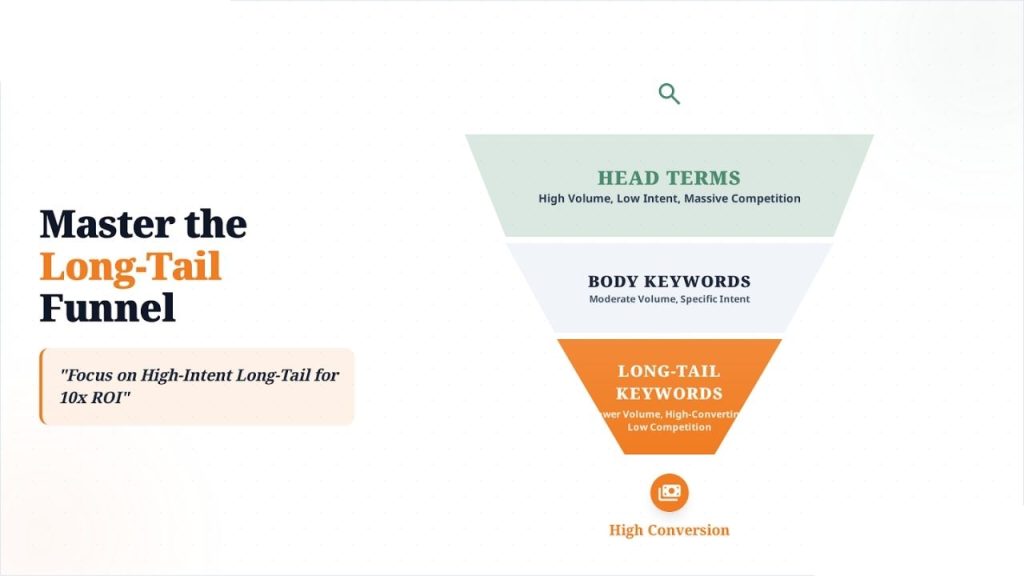
The problem? Most agencies try to out OTA the OTAs by targeting generic keywords like “beach vacations” or “Europe tours.” These keywords have search volumes of 50,000+ but conversion rates below 0.5% because they attract tirekickers, not buyers. You’re fighting for traffic that doesn’t convert.
Luxury vs. Budget Search Psychology
Luxury travelers search differently than budget travelers. Someone looking for “cheap flights to Bali” is price shopping. Someone searching “private villa with ocean view Bali honeymoon package” is ready to book. The intent gap is massive, yet most agencies target the same crowded keywords regardless of their positioning.
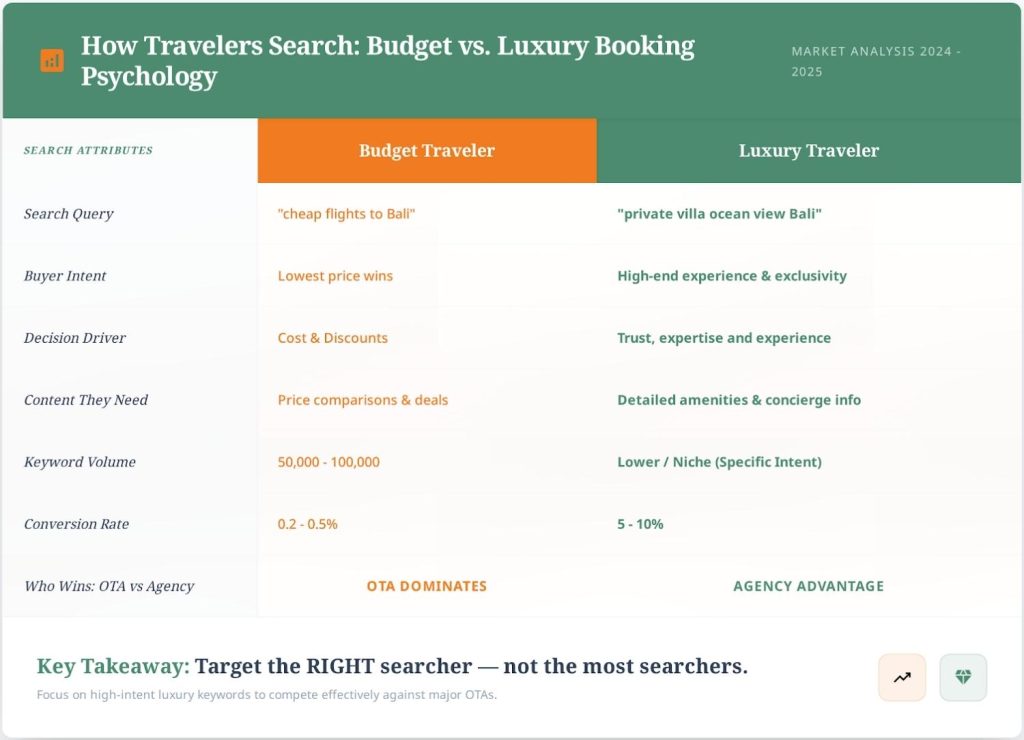
A generic SEO agency optimizing for “best travel deals” when your ideal client searches “exclusive wine tours Tuscany private guide” is actively misaligning your brand with wrong traffic. Your SEO agency must understand this fundamental difference in buyer psychology.
Keyword Strategy: Head Terms vs. Long Tail Intent
| Keyword | Monthly Volume | KD Score | Conversion Intent |
| luxury travel packages | 50,000+ | 85/100 | Low – Browsing |
| luxury Maldives honeymoon packages from NYC | 500 | 28/100 | HIGH – Ready to Book |
| beach vacations | 100,000+ | 90/100 | Very Low – 0.2% |
| adults-only Caribbean resorts for couples | 1,000 | 35/100 | HIGH – 90% Intent |
| Europe tours | 40,000+ | 82/100 | Low – Tire-Kickers |
| private villa ocean view Bali honeymoon | 800 | 22/100 | HIGH – Purchase Ready |
Key Insight: You need 400 clicks on a high-volume keyword to get 1 booking (0.25% CVR) vs. only 12-13 clicks on a longtail, high intent keyword (8% CVR). The math is brutal, stop chasing volume.
Travel SEO Requirements
Destination Page Architecture
Your destination pages need to be mini websites, not glorified brochures. Each destination requires: detailed itineraries, local guides, seasonal pricing information, visa requirements, and unique selling propositions that differentiate you from OTA offerings.
A destination page for “Italy Tours” should cover regions, experiences, price points, and why booking with you beats booking direct with hotels. Target long tail specifics like “family friendly Santorini hotels with pool” rather than generic “Santorini hotels.” This is where independent agencies can win with deep, authoritative, experience driven content that OTAs can’t replicate at scale.
Travel Schema Markup Implementation
Travel websites need specialized schema types that most generic SEO agencies don’t implement. Without these, your rich snippets disappear from search results and your click through rates plummet. Required schema types include:
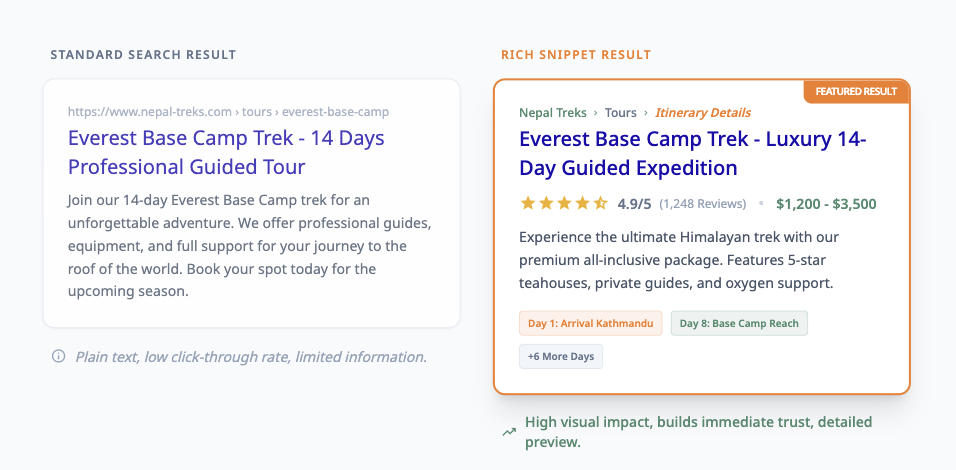
- Itinerary schema for multi day tours
- Review schema for destination experiences
- Booking schema for package availability
- Event schema for seasonal travel promotions
- Star ratings, pricing, and availability displayed directly in search results
E-E-A-T Signals for Travel Brands
Experience, Expertise, Authoritativeness, and Trustworthiness matter more in travel than almost any other industry, especially since Google’s helpful content updates. Google now prioritizes content from people with firsthand travel experience over generic travel advice. Your website needs:
- Author credentials and bios with real travel experience
- First hand destination guides written by people who’ve actually been there
- Transparent business information and verifiable customer reviews
- E-E-A-T signal audit and strategic content/backlink authority building
Agency Selection Criteria
Travel Industry Experience Verification
Don’t just ask if they’ve done SEO. Ask for specific travel client examples. Request case studies showing travel website traffic growth, booking inquiry increases, and competitive positioning against OTAs. An agency that’s worked with restaurants won’t understand why your “Maldives honeymoon packages” page needs different optimization than your “family adventure tours” page.
| What to demand: Concrete examples ‘We increased organic traffic for XYZ Luxury Travel by 200% in 12 months’ or ‘We helped ABC Adventure Tours rank #1 for 15 destination specific keywords.’ Vague answers are a red flag. |
Case Studies with Travel Clients
Look for agencies that can show before/after organic traffic graphs for travel websites, conversion rate improvements from inquiry to booking, and examples of ranking for competitive travel keywords. The best agencies will have case studies showing how they helped independent agencies outrank OTAs for specific destination queries not just ranking improvements for generic terms.
A restaurant SEO agency won’t understand why your booking inquiry form matters more than your blog traffic. Look for case studies that show actual travel business metrics.
Technical SEO Capabilities Assessment
Travel websites have unique technical requirements. Ask potential agencies specifically about:
- Multilingual SEO for international destinations
- Mobile optimization for on the go traveler behavior
- Page speed for image heavy destination content
- Itinerary schema, review markup, and destination page architecture
- Duplicate content handling across similar destination pages
ROI Focused SEO Metrics
Travel Lead Generation KPIs
Forget vanity metrics like page views. A destination page that generates 50 qualified leads monthly is more valuable than a blog post that gets 1,000 views but zero inquiries. Focus on:
- Qualified inquiry form submissions from organic traffic
- Phone call tracking from destination and package pages
- Email newsletter sign ups from destination content
- Booking consultation requests from organic landing pages
Full Funnel Booking Conversion Tracking
Track the complete funnel: organic keyword → landing page → inquiry form → qualified lead → booking. Most agencies only track the first two steps. You need to know if your “luxury safari tours” traffic is actually converting to $10,000+ bookings or just browsing. This means integrating your booking system with analytics and setting up conversion tracking for different travel package types.
Customer Acquisition Cost Analysis
Calculate your current CAC from organic search, paid search, and other channels. If your average booking value is $3,000 and your customer acquisition cost through SEO is $150, that’s a 20x return. If your current organic CAC is $200 but your paid search CAC is $500, SEO becomes an immediate ROI opportunity. A travel SEO agency should help you reduce acquisition costs by targeting higher-intent keywords and improving conversion rates.
Common SEO Mistakes Travel Agencies Make
Chasing High Volume Keywords
“Caribbean vacation” might get 50,000 monthly searches, but the keyword difficulty is 85/100. You’ll spend months trying to rank while missing easier wins like “adults only Caribbean resorts for couples” with only 1,000 searches but 90% conversion intent.
The math is brutal: you’d need 400 clicks on the high volume keyword to get one booking, versus roughly 12 clicks on the specific keyword. Yet most agencies chase volume over conversion intent. Stop targeting keywords that OTAs have locked up for a decade.
Content Strategy Misalignment
Travel agencies often create content that attracts the wrong audience. A blog post about “10 Best Beaches in Thailand” might get 10,000 views but zero bookings if it doesn’t guide readers toward your specific tour packages. Similarly, generic content about “10 Best Beaches in the World” won’t help your agency rank for “Maui family vacation packages.”
Your content strategy should map to your service offerings and booking funnel, not just travel inspiration. Every piece of content should have a clear conversion pathway.
Technical SEO Oversight
Missing schema markup means your packages don’t show rich snippets. Slow page speeds kill mobile conversions 60% of travelers research trips on their phones. Duplicate content from destination pages targeting similar keywords cannibalizes your own rankings. These technical issues compound, and most generic agencies don’t have travel specific checklists to catch them.
Agency Red Flags to Watch For
Travel Industry Knowledge Gaps
If an agency can’t explain the difference between targeting “luxury travel” versus “luxury safari packages,” doesn’t know what itinerary schema is, or suggests targeting “cheap flights” for your premium agency these are major red flags. Ask specific questions about travel industry challenges and listen for detailed, specific answers versus generic SEO jargon.
Unrealistic Timeline Promises
Anyone promising first page rankings in 30 days for competitive travel keywords is either lying or using black hat tactics that will get your site penalized. Travel SEO typically takes 6–12 months for meaningful results, especially when competing against established OTAs. Be wary of agencies that guarantee specific rankings or timelines, sustainable SEO takes time.
No Travel Specific Portfolio
An agency’s portfolio should include travel clients with demonstrable results. If they only show e commerce or local service clients, they lack the travel industry context needed to understand your competitive landscape and booking psychology. If they can’t provide specific travel client examples, they’re a generalist agency learning on your budget.
What Success Actually Looks Like
Travel Website Authority Growth
Look for measurable increases in domain authority, quality referring domains, and improved rankings for competitive travel keywords. A successful travel SEO campaign should show your site gaining authority against OTAs in specific niches where you have genuine expertise not trying to compete across all of travel.
Organic Traffic Quality Improvement
Not all traffic is good traffic. Success means higher conversion rates from organic visitors, lower bounce rates on destination pages, and increased time on site for travel content. Your agency should provide reports showing traffic quality metrics: not just visitor counts. Higher intent keyword traffic that converts beats generic volume every time.
Booking Inquiry Increase Metrics
The ultimate success metric: more qualified booking inquiries from organic search. Track inquiry volume, lead quality scores, and booking rates from organic traffic. A good agency will help you connect SEO metrics to actual revenue, proving ROI through the complete customer journey.
SEO Task Priority Matrix for Travel Agencies
| Quick Wins (0–90 days) | Long Term Plays (12 – 24 months) | Never Worth It |
| Fix site speed & Core Web Vitals | Build comprehensive destination guides | Chase head terms like ‘cheap flights’ |
| Implement itinerary + review schema | Earn travel industry backlinks | Copying OTA content strategies |
| Optimize existing destination pages | Target competitive destination keywords | Buying low quality backlinks |
| Set up conversion + call tracking | Build E-E-A-T author credentials | Guaranteed ranking promises in 30 days |
| Fix duplicate content/cannibalization | Long tail niche authority content | Generic ‘best beaches in world’ blogs |
Implementation Timeline
Phase 1: Quick Wins (Days 0 – 90)
Start with technical SEO fixes that deliver rapid improvements:
- Site speed optimization and Core Web Vitals fixes
- Mobile usability improvements for the 60% of travelers on phones
- Itinerary, review, and booking schema implementation
- Fix duplicate content and cannibalization issues
- Optimize existing destination pages for conversion
- Set up full funnel conversion and call tracking
Phase 2: Authority Building (Months 3 – 8 )
Build content around specific travel niches where you have genuine expertise. Create comprehensive destination guides written by people with firsthand experience, develop itinerary content that OTAs can’t replicate, and start building quality backlinks through travel industry partnerships. This phase establishes your agency as a credible source in your specific niches.
Phase 3: Competitive Positioning (Months 8 – 12+)
Target competitive destination head terms and build domain authority to compete with OTAs in your specific niches. This requires consistent content creation, strategic link building, and ongoing technical optimization. Expect 6–12+ months for significant competitive gains, but the compounding returns make it your most cost effective acquisition channel.
Budget Considerations
Investment Ranges
Quality travel SEO typically costs $2,000 – $10,000+ monthly depending on your market, competition level, and scope of work. Small agencies targeting local markets can start at $2,000–$4,000 monthly. Larger agencies targeting competitive luxury international markets should budget $5,000–$10,000+. Budget agencies often provide generic services that don’t address travel specific challenges, consider SEO an investment in your business infrastructure, not an expense.
ROI Timeline Expectations
Travel SEO ROI typically follows a curve: minimal returns in months 1-3, gradual improvement in months 3 – 6, and significant returns after 6+ months. Factor in your average booking value and conversion rates to calculate expected ROI timelines. If your average booking is $3,000 and organic SEO generates 20 additional bookings per month, the math becomes undeniable.
Performance Based Pricing
Some agencies offer performance based pricing tied to rankings or leads, these can align incentives but require careful structuring. They can also incentivize short-term tactics over sustainable growth. Look for agencies that align their success with your business goals rather than just metrics, and ensure you have clear tracking and conversion data in place before entering such agreements.
Next Steps: After You Select an Agency
Proper Onboarding Process
A proper onboarding includes a comprehensive website audit, competitor analysis, keyword research specific to your travel niches, content gap analysis, and full technical SEO assessment. Your agency should provide a detailed strategy document within the first 30 days that shows exactly how they plan to move the needle for your specific business.
Goal Setting and KPI Definition
Define specific, measurable goals aligned with your business: target keywords to rank for, inquiry volume increases, booking value improvements, and ROI targets. If your goal is to increase luxury cruise bookings by 25%, your KPIs should track organic traffic for cruise related keywords, booking inquiry form submissions for cruise packages, and conversion rates from cruise content. Set realistic timelines and establish regular reporting schedules.
Progress Monitoring Framework
Establish monthly reporting that shows: keyword ranking improvements, organic traffic growth, conversion rate changes, and ROI calculations. Include competitive analysis showing your positioning against OTAs and other agencies. Regular strategy calls ensure alignment as your business evolves. Your agency should connect SEO metrics to business outcomes, not just traffic numbers.
| Ready to Stop Losing Clients to OTAs? The travel agencies winning online today aren’t outspending their competition, they’re out-strategizing them. Your next step: audit your current website’s SEO performance, identify your competitive gaps, and interview agencies with specific travel industry experience and a proven track record of helping independent agencies compete. The right SEO agency can transform your online presence from invisible to irresistible but you need to ask the right questions, set realistic expectations, and commit to a strategy that plays to your agency’s unique strengths. |
